Picture someone trading from three cities in one month. A login page that just loads isn't enough. They need a setup that feels the same wherever they open it, and this Mono-Zine.com Review checks whether that actually happens.
Mono-Zine 's scope covers the interface, liquidity access, strategy resources, account tiers, and support. These are the parts that count once the novelty of signing up wears off.
What Makes the Platform's Interface Worth Trusting?
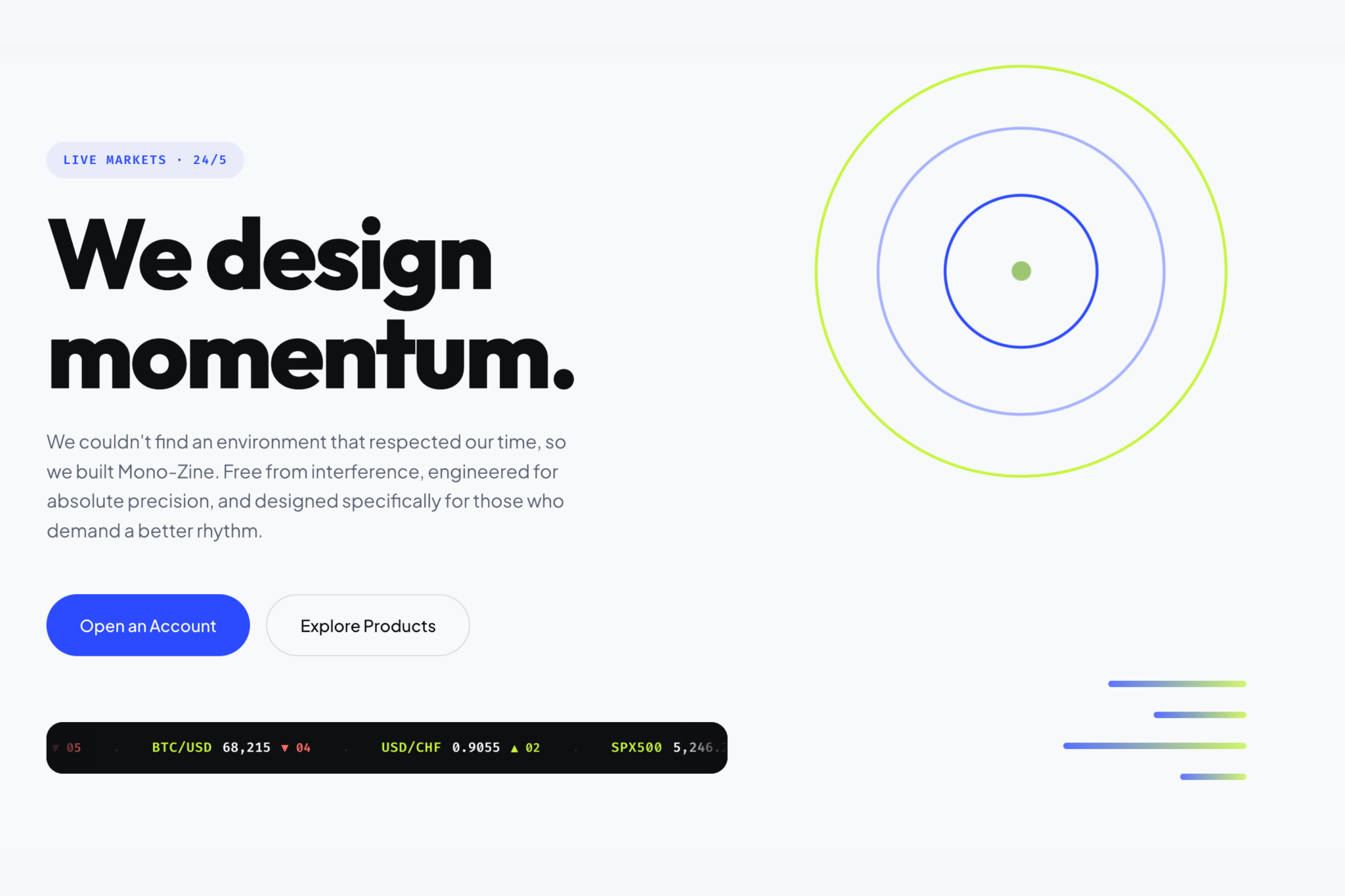
Mono-Zine skips the visual clutter that fills many trading platforms. That looks like a deliberate choice, not an accident.
Every element on screen apparently has to justify its spot. If a feature doesn't help someone decide faster, it gets cut instead of staying for decoration.
Not many platforms show that kind of restraint. Plenty of them pile on extra panels to seem more advanced, even when those additions just slow a trader down.
A busy screen costs real time during a fast market move. Each stray click or unneeded panel eats a second, and those seconds pile up across a session.
Does a Simple Interface Mean Fewer Tools?
Simplicity here doesn't appear to mean less depth, which is worth flagging in this Mono-Zine.com Review. The core numbers a trader actually needs stay visible without extra scrolling.
Cutting the clutter doesn't cut the substance underneath it. It just puts that substance somewhere easier to find, particularly for someone bouncing between devices all day.
Switching from a laptop to a phone works better with this kind of consistency. The same thinking that strips out unnecessary panels also keeps the layout recognizable across screens, so nothing feels unfamiliar after a switch.
How Deep Is the Platform's Market Access?
Liquidity gets a lot of attention in this Mono-Zine.com Review, and for good reason. It determines how smoothly an order moves through the market. Mono-Zine says it connects traders to pricing normally kept for institutional players.
Deeper liquidity matters most during high-impact news, and that's exactly when thin liquidity elsewhere tends to leave traders stuck at prices nobody wanted.
Here's a quick look at what the platform's stated access covers.
- Sovereign markets. More than 50 currency pairs, running from majors to less common combinations.
- Equity indices. Access to major global indices without picking individual stocks.
- Hard assets. Gold, silver, oil, and other physical resources, all with the same liquidity setup.
- Digital instruments. A range of digital assets in the same account, with no separate wallets required.
Running all four through one account is a real plus, and it's the kind of detail this Mono-Zine.com Review keeps coming back to. The platform says over 1,000 instruments sit behind a single login.
Nobody working across time zones wants five different platforms for five different asset types. Fewer logins mean fewer weak spots, and fewer passwords to juggle while working remotely.
Keeping everything under one roof also means a trader doesn't relearn a new layout every time they branch into another asset class. The same screen logic and order process carries over, whether it's sovereign markets, indices, hard assets, or digital instruments.
What Sets the Platform's Strategy Resources Apart?
Two structural frameworks stand out here, and this Mono-Zine.com Review found both go further than the usual trading tips scattered across most education pages.
The first is spread convergence. It covers pricing gaps that flash up briefly between liquidity pools when news moves fast.
Each liquidity provider keeps its own order book, and those books can drift apart for a short stretch before syncing back up. That short stretch is what the framework zeroes in on.
The second framework looks at the gap between Friday's close and the market reopening days later. Mono-Zine treats that gap as a direct result of what happened while trading was paused, not something random.
Studying these gaps instead of guessing at them adds real weight to the educational content, and that's a detail worth noting in any Mono-Zine.com Review. It shows an understanding of market structure well beyond the entry-level explainers most sites offer.
This kind of content suits traders who already have the basics down and want an edge. It also says something about the people behind the platform. They think about markets in specifics, not just broad strokes aimed at beginners.
Why Do These Frameworks Matter for a Mobile Trader?
Someone hopping time zones doesn't always catch every headline the second it breaks. A documented way to work through weekend gaps gives them something to start from, not a blank page.
That's a practical edge, not just an academic one. It hands a trader something solid to work with after time away from the screen, no matter where that screen happens to be.
How Does the Account Structure Scale With a Trader's Needs?
Account access grows in stages here rather than unlocking everything at once, and that's a detail this Mono-Zine.com Review found genuinely useful. The platform runs several tiers, each opening up more of the same underlying system.
Someone starting out gets the same execution engine and the same asset access as a trader on a higher tier. What shifts is the level of support and reporting attached, not the core experience itself.
That's a fair way to handle growth. A freelancer building experience on the side doesn't get shut out of the fundamentals just because they're starting small.
Since every tier runs on the same base system, moving up doesn't mean learning new software. That continuity counts for someone who'd rather spend time trading than relearning a platform every few months.
How Does Support Work Across Different Time Zones?
A platform that only performs well in one time zone isn't much good to someone without fixed hours. So how does Mono-Zine handle contact for that kind of trader?
Every inquiry reportedly gets a response from an actual person within one business day. No automated replies get in the way.
That consistency carries weight for a trader logging in from a different country each week. Support channels also stay simple here rather than buried behind layers of menus, based on what shows up on the site.
Contact details sit right there, along with a stated response window. That beats a generic form and an open-ended wait that might never end.
It doesn't sound like much written down. But for someone without a fixed office, knowing exactly how and when a question gets answered is a kind of reliability that's easy to overlook until you actually need it.
Does the Platform Suit Traders Who Move Around Often?
Here's what stands out most in this Mono-Zine.com Review. The interface stays consistent, liquidity access doesn't shift by location, and strategy resources travel with the account no matter where it's opened.
That combination means more to a freelancer than to someone parked at the same desk every day. Consistency across sessions, rather than a long feature list, tends to keep a mobile trader sticking with a platform.
None of these features depend on being in one specific place at one specific time. The platform seems to have been built with that in mind from the start, from the interface right down to how support gets handled.
A trader shouldn't have to relearn the system every time they change cities. That steadiness matters more than it looks on paper, especially for someone whose work already involves enough change.
Final Thoughts
This Mono-Zine.com Review set out to look past the pitch and check the structure holding the platform together. The stripped-back interface, the depth of market access, and the documented strategy frameworks all point toward genuine intent.
Add an account setup that scales without changing the core experience, plus support built for people without fixed hours, and the whole picture holds up. None of this replaces doing personal research before trusting any trading environment with real money.
For a trader who values consistency across locations over surface polish, the details in this review paint a fairly clear picture. That clarity is really the whole point of checking a platform properly before relying on it day to day.